
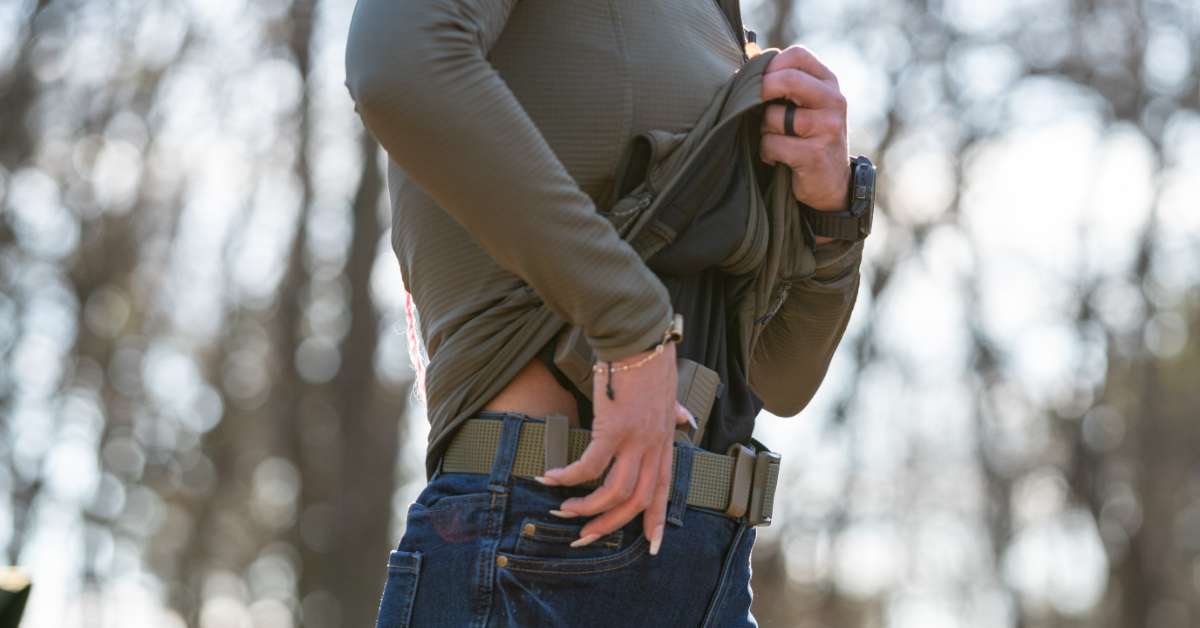
 Concealed Carry Clothing for Women | Photo Courtesy of 5.11 Tactical
Best Concealed Carry Clothing for Women Toughing the Outdoors

If you’re an avid adventurer and spend serious time outside, you know that picking the perfect outfit can be tricky.
Your “go-to” outfit for walking around town can quickly become uncomfortable the second you add a pack hip belt, a windy ridgeline, or a puffy jacket that turns your waistline into a marshmallow.
For this exact reason, outdoor clothing is designed to work while you are moving, sweating, layering, and adjusting to changing conditions. Now, concealed carry clothing adds another layer of complexity, especially for women seeking out clothing options that feel normal, comfortable, and functional, not tactical or overbuilt.
At the end of the day, women want something practical, outdoors-focused, and that actually works when you are hiking, camping, traveling, or spending long days outside.
What “Outdoor-Ready” Concealed Carry Clothing Actually Means
Outdoor, carry-friendly clothing serves two primary purposes: allowing women to conceal carry their personal firearm, while still offering the same benefits and ruggedness as any other non-concealed carry outdoor-clothing design.
The harsh truth is that what might work for a short errand or casual walk does not always translate to the uneven terrain, long hours, or changing weather of an outdoor adventure.
The three non-negotiables:
- Stability: No bouncing, sliding, sagging, or shifting of your firearm once you start moving
- Comfort: No hot spots, pinching, chafe points, or pressure that gets worse at mile 4.
- Access with layers: Your setup still makes sense when you add a shell, gloves, or a pack.
It is also important for women to keep in mind that outdoor use adds friction and wear. Backpacks, hip belts, weather layers, and sweat all change how clothing and certain holsters behave, so those factors matter just as much as the carry feature itself.
The Main Types of Women’s Concealed Carry Clothing
The bulk of women’s outdoor concealed carry clothing falls into 5 categories, each having situations where they work well and situations where they should be avoided.
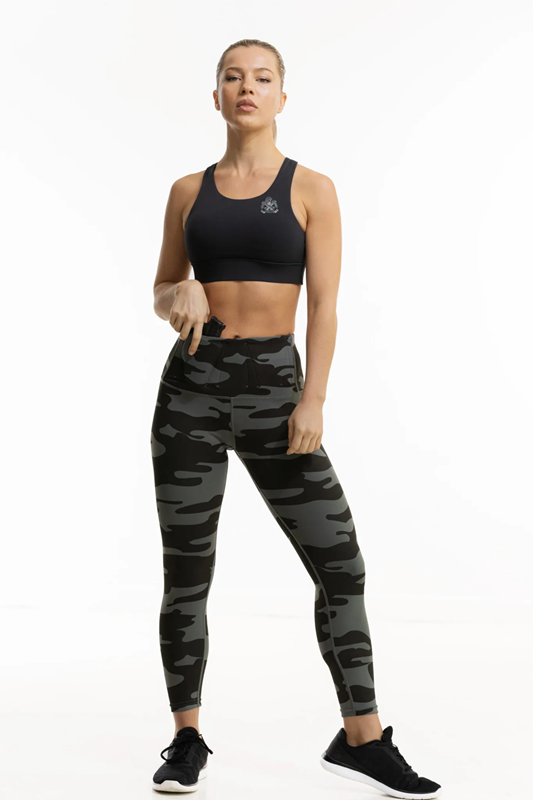
Concealed carry leggings and activewear bottoms
Leggings are one of, if not the most, popular options, and for good reason.
Leggings are comfortable and a very familiar form of clothing to most women, so it makes sense that concealed carry leggings have become an increasingly popular option.
With that being said, not all leggings are built to the same level of toughness. Some options that feel great in typical daily wear still can behave quite differently once you start climbing, sweating, or really testing your limits.
Best for: Dog walks, travel days, casual hikes, errands, really any “I want to wear normal clothes” days.
Where some leggings can fail is in outdoor activities, such as extended hikes, steep terrain, heavy sweat, and constant movement
What to look for (for the outdoors):
- A waistband that does not roll when you bend and step up
- Compression that stays consistent after an hour, not just in the mirror
- Fabric designed to handle sweat and dry fast
A lot of concealed carry leggings are built to withstand harsh conditions. Just make sure to research manufacturers before making any decision
Quick field test:
Do 10 deep squats, then step onto a bench 10 times. If the waistband rolls or the leggings shift too much with just those movements, they will likely cause you problems on the trail.
Concealed carry pants and hiking pants
For longer days outside, structured pants often perform far better than leggings.
Hiking pants are designed to move with you, manage temperature, and hold up under friction, which makes them a strong foundation for any outdoor carry setups.
The key difference really lies in the structure, as a good pair of hiking pants stays put, even when your body position changes constantly.
Best for: Hiking with a pack, camping, extended travel, and high-friction situations like navigating the woods.
Where these pants can fail is if they have shallow pockets, a flimsy waist structure that slips, or too much stretch that sags after a few miles.
What to look for:
- A waistband with enough structure to stay put under movement
- Room for layering without turning into a circus tent
- Pocket placement that does not interfere with backpack hip belts
Quick field test:
If your pack’s hip belt sits right on top of your waistline, anything “waist-based” gets more complicated. Hiking pants that fit well under a hip belt might not be the most flashy option, but they are often the most reliable way to go when outdoors.

Concealed carry jackets, vests, and outer layers
Cold weather greatly changes the equation when deciding on outdoor concealed carry clothing.
Layers make concealment far easier, but they also introduce challenges when it comes to access to your firearm. Women’s concealed carry jackets, vests, and outer shells need to work with gloves, zippers, and insulation, not against them.
These options are most useful when it is cold enough that you are already wearing an outer layer most of the day.
Best for: Winter camping, cold hikes, and town-to-trail layering
Where these outer layers can fail is, as mentioned, access blocked by zippers, gloves, or thick insulation, or just unstable pocket carry.
What to look for:
- Pockets and zippers you can actually use with cold hands
- A fit that works when you add a midlayer, check out this one we dig in our Patagonia Micro Puff Review.
- Weather protection that matches your environment
In winter, it is less about hiding and more about planning. If your outer layer becomes a barrier instead of part of the system, frustration and safety concerns set in quickly.
Base layers, compression tops, and “under layers”
Minimalist setups really appeal to women who want less bulk and more freedom of movement in their concealed carry setup. These types of concealed carry systems can work well for high-movement days, but comfort and fit should be non-negotiable.
Anything worn close to the body needs to disappear mentally. If you are constantly aware of it, something is wrong, and you need to reconsider your carry options.
Best for: Running, climbing, and minimalist setups under a light layer
Where the underlayers can fail is when excessive sweat builds up, chafing, and general shifting over time.
What to look for:
- Fabric that does not trap sweat
- Flat seams that do not rub under motion
- A fit you can wear for hours without thinking about it
Off-body options that still make sense outdoors
Off-body carry is another very common option among women, especially when the clothing options for the occasion do not offer enough structure or comfort. For outdoor use, while it might seem like a burden, concealed carry bags can actually simplify things by separating carry from clothing entirely.
The tradeoff here is responsibility. If it is off your body, you need to take much better care in managing it and be conscious of where you put your bag.
Best for: hiking days with pack hip belts, travel, town-to-trail days
Where these off-body options can fail really comes down to preference and activity, as they can bounce, cause comfort issues over long periods, and inconsistent control of the bag can be concerning.
One reason belt bags and crossbody options feel like another go-to carry method right now is that they already exist in mainstream outdoor and everyday fashion. When done right, they blend in easily with outdoor apparel.
The Fit and Fabric Checklist
Many concealed carry clothing options for women fail not because it’s a bad product, but because the fit or fabric is wrong for the wearer. Going on a trip outdoors only works to quickly magnify these problems.
Fabric rules for outdoor women:
- Compression that does not migrate after sweat and movement
- Breathability that does not turn into a sauna under layers
- Dry time that matches the climate
- Durability for brush, rocks, and repeated wear
The movement test (do this at home):
- 10 deep squats
- 10 step-ups on a chair or bench
- Bend and twist to pick something up
- Put on your backpack and tighten the hip belt
- Add a shell layer and repeat
If something becomes annoying during this test, it will not get better after three hours outside.
Women-specific fit issues to watch:
- Waistband roll-down with curvier hips
- Pocket placement that sits wrong on your frame
- Bulk buildup during winter layering
Warm Weather vs Cold Weather Carry Clothing
As you might imagine, a woman’s choice of clothing when it comes to carrying a firearm varies drastically based on the expected climate.
Warm weather: sweat and stability
Heat does a good job of exposing weak designs over time. Certain fabrics might get slick, waistbands can slide, and anything unstable becomes overtly obvious and uncomfortable.
Women should focus on:
- Breathability and quick drying
- A stable fit that does not shift with sweat
- Minimal bulk, because bulk equals heat
Cold weather: layers and access
Cold weather offers more options for concealment, but the ability to access your firearm can suffer if you do not plan accordingly. Zippers, gloves, and thick insulation change how quickly and comfortably you can interact with your concealed carry strategy.
Women should focus on:
- Predictable zipper layouts and accessibility
- Gloves-friendly features
- Layering systems that do not require constant adjustment
Choose Your Setup by Activity
Similar to how weather impacts your choice of clothing, the level of movement and type of activity you are preparing for plays just as important a role.
Day hiking with a pack
The hip belts on hiking backpacks change everything when it comes to how you can access a firearm.
The problem: Hip belts occupy prime waist real estate.
The fix: Elect to go with clothing and concealed carry systems that either work under the belt or avoid that area entirely.
If you hike often with a real pack, prioritize comfort under load over clever carrying features.
Camping and around camp
Around camp, your options are much more slack, as you will mostly be sitting, relaxing, cooking, gathering camp essentials, and preparing gear for the next day.
Women should look for:
- Comfort while relaxing at camp
- Clothing that does not bind or pinch
- Easy layering as temperatures change
Hunting and field use
For field days, durability and quiet fabrics matter more than anything.
Women should focus on:
- Weather resistance
- Long-wear comfort
- Normal outdoor aesthetics that do not feel tactical
- For men, we reccomend a sturdy, warm waterproof pair of hunting boots.
Running and high-movement days
Running demands stability above all else.
Just keep it simple:
- Chafe-free seams
- Sweat management
- A system that stays put without thought
FAQs
What is the best concealed carry clothing for women who hike?
For hiking, clothing that stays stationary during constant movement and works with a backpack hip belt is key. Well-made hiking pants and thoughtful layering tend to outperform leggings on longer or steeper days.
Are concealed carry leggings secure enough for outdoor use?
They can be, especially for casual activity, but reliability varies widely based on activities. Fit, waistband structure, and fabric quality matter more than the label.
What should I look for in a concealed carry jacket for women?
Look for accessible pocket layouts that aren’t hard to get to, quality and functional zippers, and a fit that still works with midlayers and gloves.
How do I avoid printing with outdoor layers?
Choose fabrics that do not migrate and test with your real layers. Printing often comes from garments that shift or compress unevenly over time.
