
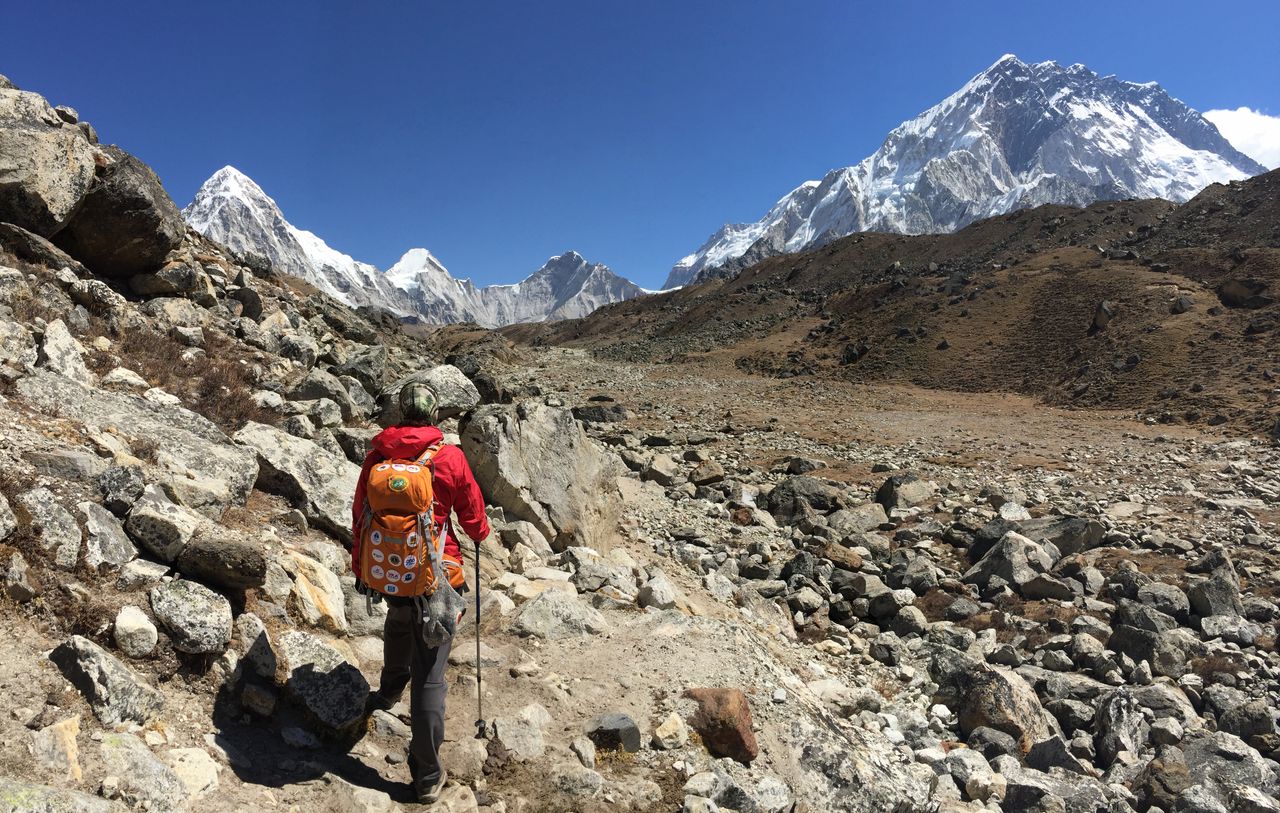
 In Route Trekking to Mt. Everest Base Camp
Everest Base Camp Trek: Everything You Need to Know

I’ve walked the trail to Everest Base Camp more times than I can count, and the question I hear most from first-timers is always the same: what am I actually signing up for? Most guides online sell the scenery and skip the parts that matter, the ones that decide whether you finish strong or turn back early at Namche.
The truth is the Everest Base Camp trek rewards planning far more than raw fitness. Pick the wrong month, rush your rest days, or pack the wrong boots, and the mountain will let you know. Get those calls right, and it becomes one of the most achievable big adventures out there. This guide covers what I wish every trekker knew before their first day on the trail.
While Everest delivers one of the world’s greatest trekking adventures, destinations like Taos Ski Valley prove that mountain culture extends far beyond the Himalaya, offering year-round hiking, skiing, and high-alpine scenery.
If you’re building your mountain travel kit, our guide to the Best Hiking Boots, can help dial in make sure toy have the proper footwear on your base camp trek in Nepal
What the Everest Base Camp Trek Actually is
The Everest Base Camp trek is a walk, not a climb. You don’t need ropes, crampons, or any technical skill. What you need is time, decent fitness, and patience with thin air. The route starts with a short flight from Kathmandu to Lukla, a tiny mountain airstrip at 2,860 m (9,383 ft), and from there you walk north into the Khumbu Valley over about 12 to 14 days round trip.
The trail passes through places that have become names every trekker knows:
- Namche Bazaar (3,440 m) — the Sherpa trading town where most people take their first rest day.
- Tengboche (3,860 m) — home to the region’s most famous monastery, with Ama Dablam filling the sky behind it.
- Gorak Shep (5,164 m) — the last settlement before base camp, and where you sleep on the toughest nights.
- Everest Base Camp (5,364 m / 17,598 ft) — the goal, sitting right on the edge of the Khumbu Glacier.
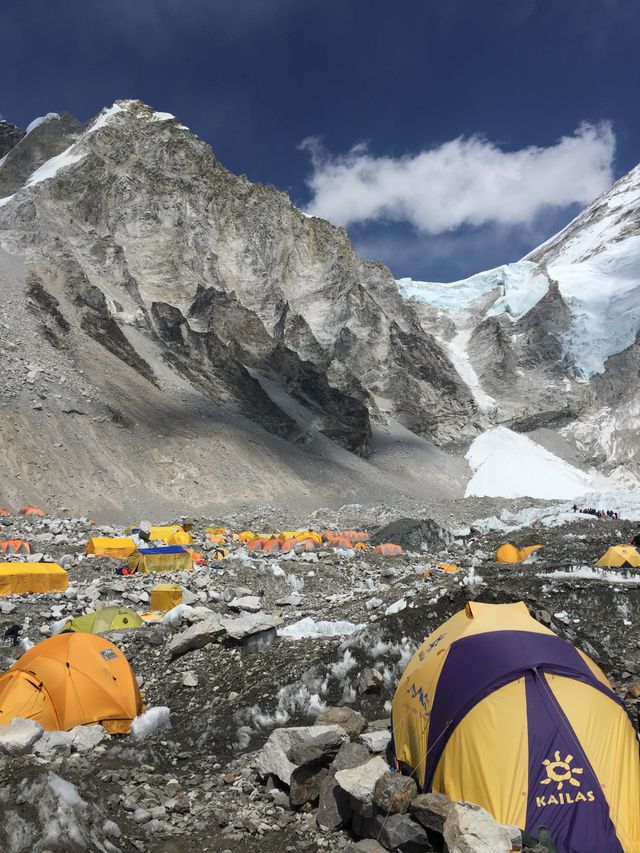
Here’s the part first-timers rarely hear: you can’t actually see Everest’s summit from base camp. The peak hides behind the shoulder of Nuptse. Base camp itself is a stretch of rock and ice, busy with climbers’ tents in spring and fairly bare the rest of the year. The view most people picture, Everest standing tall and clear, comes from Kala Patthar, a rocky rise above Gorak Shep at 5,545 m (18,192 ft). That early morning climb is where the postcard shot really happens, and it’s why nearly every itinerary includes it.
Knowing this ahead of time changes how you feel when you arrive. Go expecting a glacier, prayer flags, and a hard-earned sense of standing at the foot of the world’s highest mountain, and base camp delivers every time.
How Hard Is the Everest Base Camp Trek?
Let me be straight about the Everest Base Camp trek difficulty. The trail itself isn’t technical. There’s no climbing, no ropes, nothing that needs skill you don’t already have. What makes it hard is doing it day after day, in thin air.
You’ll cover around 130 km (80 miles) over the full trip. Most days mean 5 to 7 hours of walking, with steady uphill sections, rocky paths, and plenty of stone steps. The real challenge is altitude. Above 3,000 m the air holds less oxygen, so your normal pace feels twice as hard and your breath runs short on climbs that would feel easy at home.
On fitness: you don’t need to be an athlete. If you can walk 6 to 7 hours carrying a light daypack, on back-to-back days, you’re in good shape for it. Regular hikes and some hill training in the months before will do more than any gym plan.
So is the EBC trek hard for beginners? Yes, but doable. I’ve seen first-time trekkers finish strong and seasoned runners struggle, and the difference almost always came down to pacing and respecting the altitude, not raw fitness.
How Many Days It Takes and a Day-by-Day Snapshot
Most people ask how many days to Everest Base Camp before anything else. The honest answer is 12 days on the trail, plus a night in Kathmandu at each end, so 14 days door to door. That’s the standard Everest Base Camp trek itinerary, and it’s built around two rest days that keep you safe at altitude.
You can do it faster. Some trekkers fly one way by helicopter and cut the route to 7 to 10 days. You can also go longer by adding Gokyo Lakes or a high pass. But the 12-day walk is the version that gives your body time to adjust, and it’s the one I’d point most first-timers toward.
One tip worth its weight in gold: add 2 to 3 spare days at the end. The Lukla flight depends on weather and gets delayed even in peak season. Book a tight return flight home and you’re gambling with it.
Here’s the walking itinerary at a glance, with the altitude and the two rest days flagged:
| Day | Route | Sleep altitude | Notes |
| 1 | Fly to Lukla, walk to Phakding | 2,651 m / 8,697 ft | Easy first day |
| 2 | Phakding to Namche Bazaar | 3,440 m / 11,286 ft | Steep, long day |
| 3 | Namche rest day | 3,440 m / 11,286 ft | Acclimatisation |
| 4 | Namche to Tengboche | 3,860 m / 12,664 ft | Famous monastery |
| 5 | Tengboche to Dingboche | 4,410 m / 14,468 ft | Above the tree line |
| 6 | Dingboche rest day | 4,410 m / 14,468 ft | Acclimatisation |
| 7 | Dingboche to Lobuche | 4,940 m / 16,207 ft | Thin air begins |
| 8 | Lobuche to Gorak Shep, climb Kala Patthar | 5,164 m / 16,942 ft | Everest viewpoint |
| 9 | Gorak Shep to Everest Base Camp, back down | — | Reach base camp |
| 10–12 | Descend to Lukla, fly to Kathmandu | — | Return |
Every day flexes around your pace and the weather. The two rest days don’t. Skip those and you’re the person turning back early.
The Best Time to Trek to Everest Base Camp
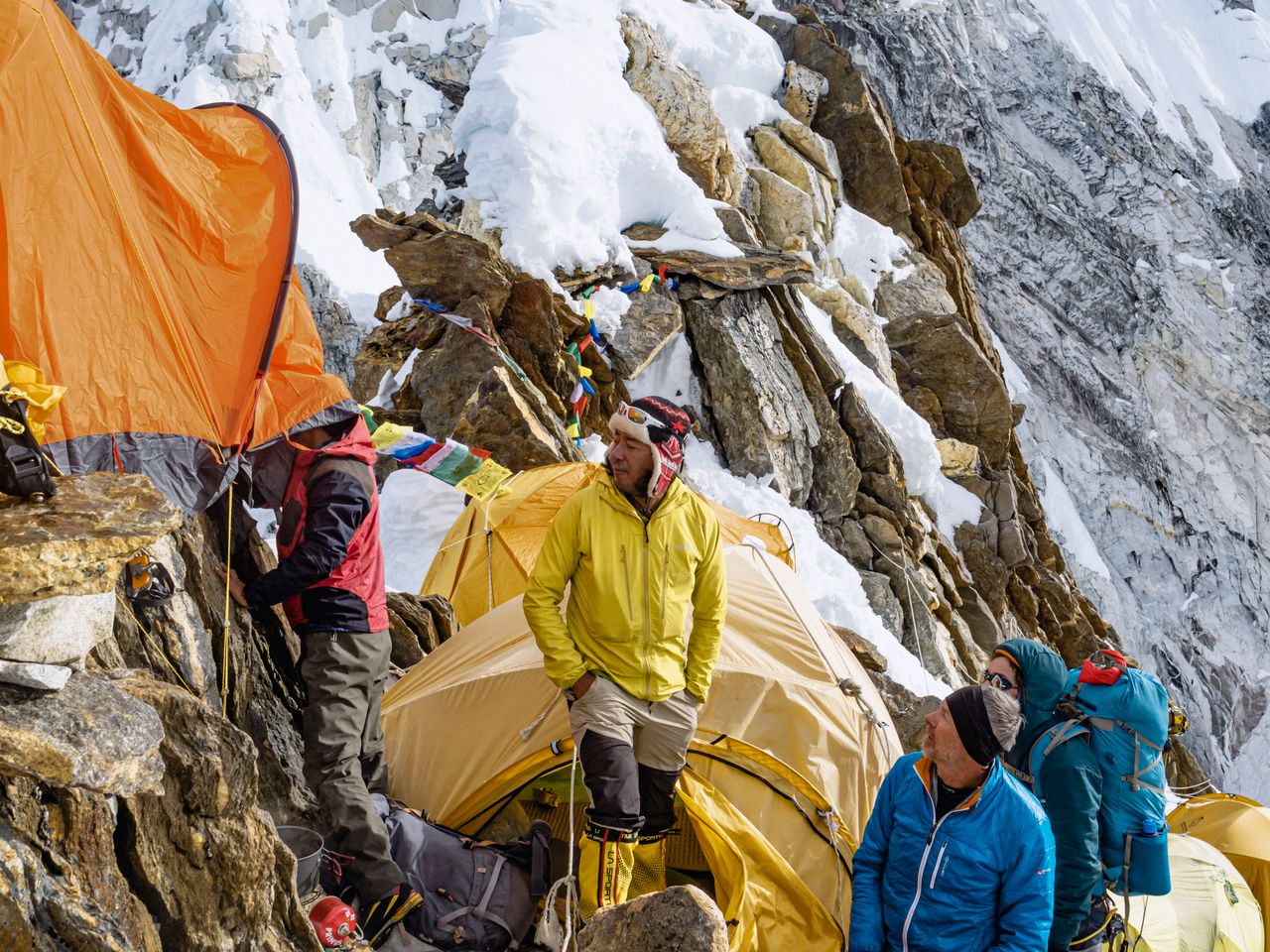
The best time to trek Everest Base Camp comes down to two seasons: spring and autumn. Both give you stable weather and clear mountain views, which is what you’re really paying for up here. Here’s how the four seasons compare:
- Spring (March–May): Warm days, blooming rhododendron forests, and long clear spells. The busiest season alongside autumn, and the one climbers use for Everest summit attempts, so base camp is full of life.
- Autumn (late September–November): The clearest skies of the year after the monsoon washes the dust out of the air. Crisp, dry, and reliable. My personal pick for first-timers.
- Winter (December–February): Quiet trails and sharp views, but brutally cold nights and a real chance of snow closing high passes. For hardy trekkers only.
- Monsoon (June–August): Warm but wet. Cloud hides the peaks, trails turn to mud, and Lukla flights get cancelled for days. Best avoided unless you go for the Gokyo side.
Here’s the trade-off nobody spells out: the seasons with the best weather are also the most crowded. If you want empty trails, you sacrifice either warmth or clear skies. Pick which one matters more to you, and plan around that.
How Much the Everest Base Camp Trek Costs?
The Everest Base Camp trek cost usually lands somewhere between USD 1,400 and USD 3,000 per person for a guided trip. That’s a wide range, and the gap comes down to what level of comfort and support you book. Here’s what changes across the three bands:
- Budget (around USD 1,400–1,800): A local guide, basic teahouse rooms, and shared group departures. Everything you need, nothing extra.
- Standard (around USD 1,800–2,400): Better-placed teahouses, a guide plus a porter to carry your bag, and smoother logistics. This is where most trekkers sit.
- Comfort (USD 2,500 and up): Nicer lodges, private departures, and sometimes a helicopter return to skip the Lukla flight risk.
What surprises people is the daily spending on top of the package. These add up fast:
- Charging your phone or battery: USD 2–5 a session, higher as you climb.
- Hot showers: USD 3–5 each.
- Wifi: A few dollars a day, and slow.
- Tips for your guide and porter: Budget USD 150–250 for the trip.
- Gear you still need to buy or rent: Boots, a down jacket, a sleeping bag.
Set aside USD 200–400 in cash for all of it.
Altitude, Health, and Staying Safe
Altitude is the one thing that decides whether you finish this trek. At base camp the air holds about half the oxygen you get at sea level, so your body needs time to adjust. Rush it and you risk altitude sickness, the main reason people turn back early.
The early signs are easy to spot if you watch for them: headache, feeling sick, dizziness, and trouble sleeping. Mild symptoms are normal and usually pass with rest. The golden rule is simple: if you feel worse, don’t climb higher. Tell your guide straight away. Most cases clear up quickly once you stop going up, and dropping to a lower village fixes the rest.
A few habits keep you safe. Drink 3 to 4 litres of water a day. Walk slowly, even when you feel strong. Skip alcohol above Lukla. And never skip your rest days, no matter how good your legs feel. Carrying a reliable power bank also becomes important, since charging gets progressively more expensive higher on the trail.
We recently tested the INIU Cougar P63 Power Bank, which proved ideal for keeping phones, cameras, and GPS devices running during extended trips.
One thing not to cut: travel insurance that covers helicopter rescue above 5,000 m. If altitude sickness turns serious, a helicopter is the only fast way down, and it’s expensive without cover. It’s the cheapest peace of mind you’ll buy for this trek.
Conclusion
Here’s the honest truth after everything above: the Everest Base Camp trek is not about being the fittest person on the trail. It’s about being the most patient. The trekkers I’ve seen reach base camp aren’t the athletes. They’re the ones who walked slow, drank their water, respected the rest days, and listened when their guide said ease off.
So if you can walk 5 to 7 hours a day for two weeks, and you’re willing to trade speed for care, you can almost certainly do this. Age and raw strength matter far less than most people think.
Plan for the right season, pack for the cold, buy the insurance, and give yourself those spare days at the end. Do that, and standing at the foot of Everest stops being a dream and becomes a date on your calendar. And if the trek lights something in you, plenty of trekkers come back for Island Peak Climbing, a 6,189 m Himalayan summit in the same valley that’s the natural next step once base camp is behind you.
If trekking to Everest leaves you looking for your next adventure, our guide to the best mountain destinations for adventure and wildlife holidays explores more unforgettable alpine destinations around the world.
Related Adventure Travel Guides
