
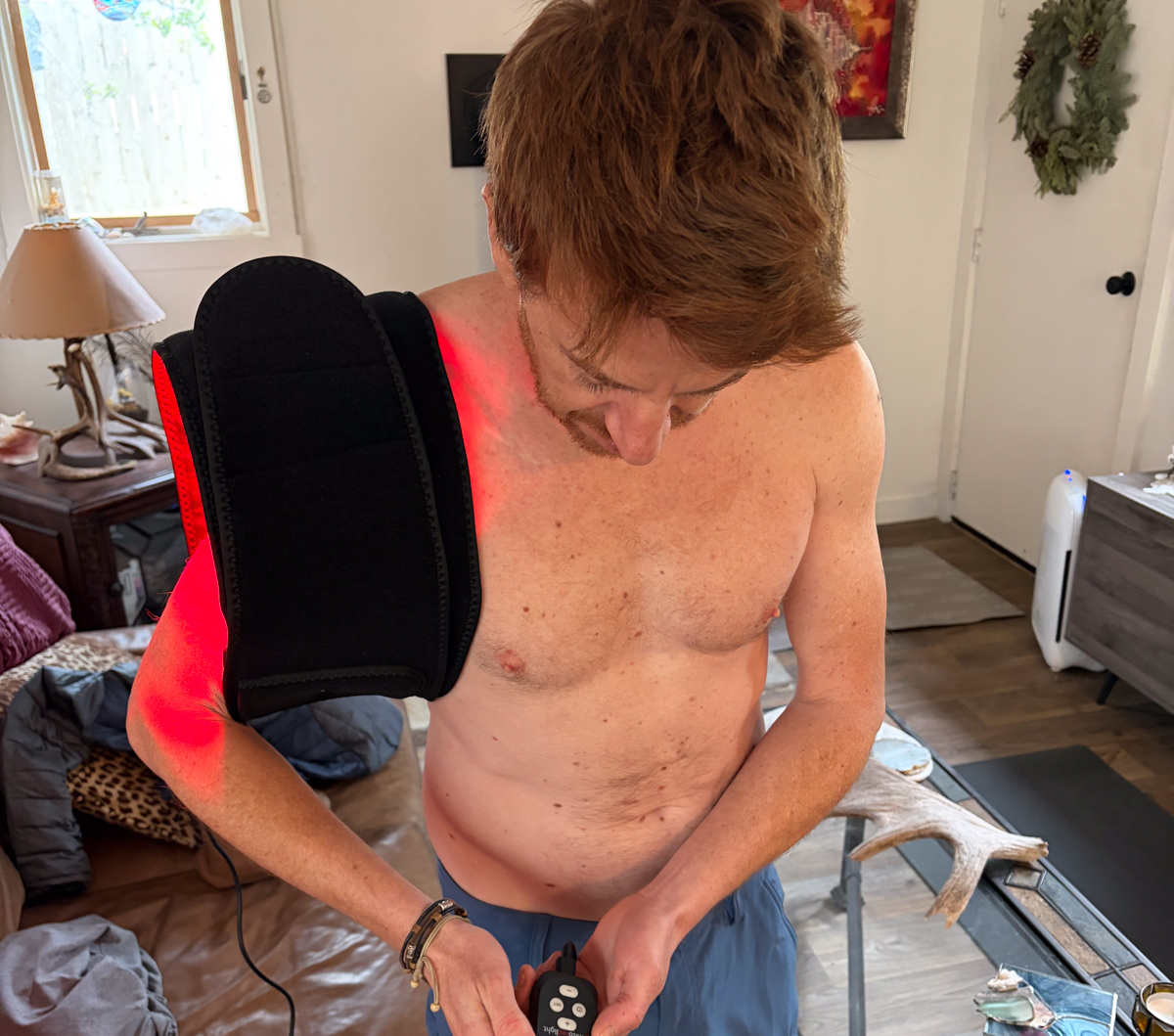
 Mountain Weekly News CEO Mike Hardaker Using Much Needed Red Light Therapy After Years of Testing Outdoor Gear and Playing in the Tetons | Photo Pat Kinney Mountain Weekly News
MitoQUAD Wavelength Belt Review: Hands-Free Red Light Therapy for Recovery

Red light therapy has gone from niche wellness trend to something I believe will become as common in recovery as ibuprofen, compression, ice, heat, massage guns and electrolyte mixes. Give it five years — hopefully less — and when athletes get banged up, tweaked, sore or overworked, “go hit the red light” will be part of the normal recovery conversation.
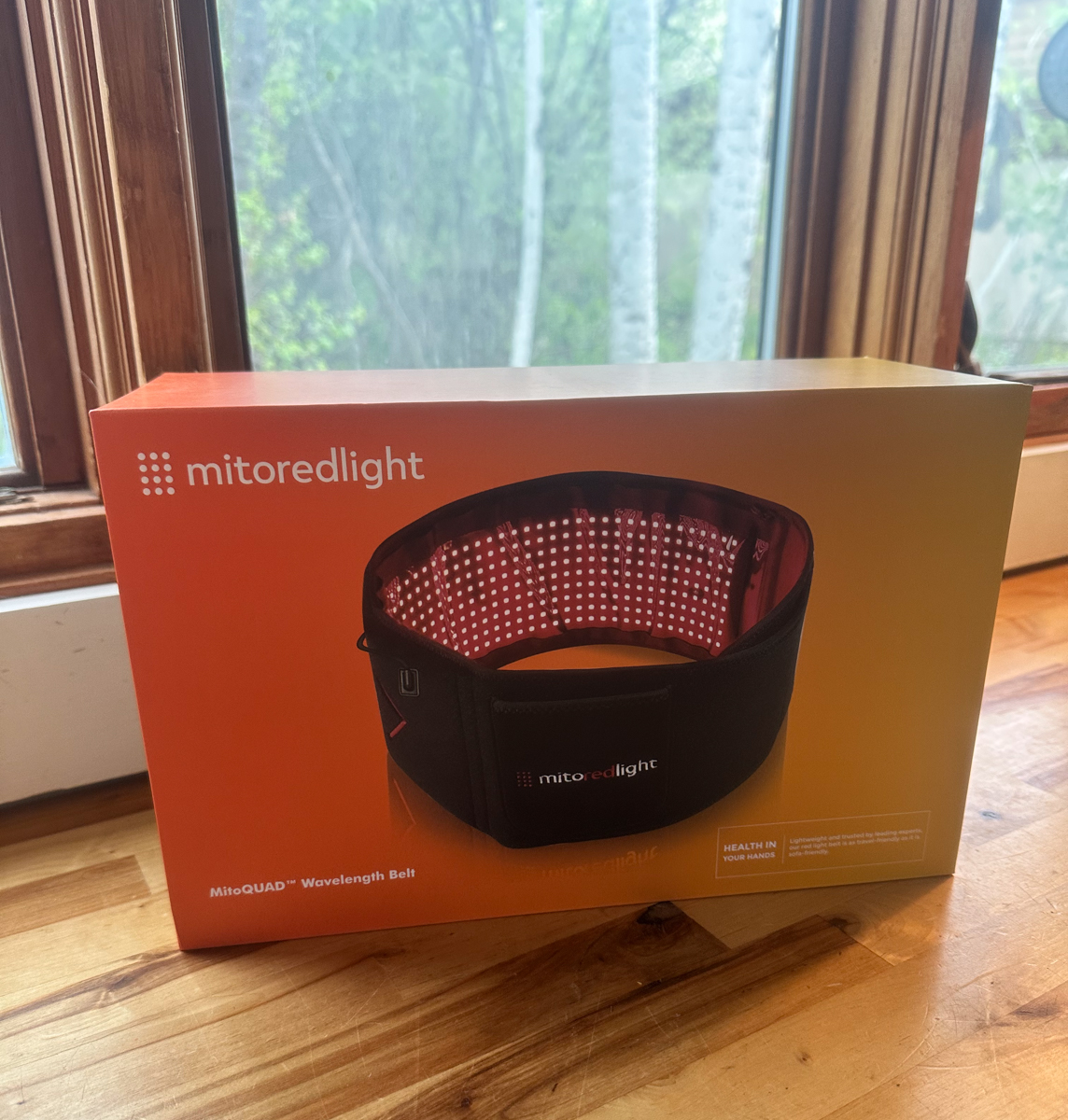
For this review, I tested the MitoQUAD™ Wavelength Belt from Mito Red Light, a hands-free red light therapy belt designed for larger treatment areas like the lower back, shoulders, thighs, hips, knees and abdomen.
Unlike the smaller MitoPRO Mobile, which is ideal for pinpoint treatment, the MitoQUAD Belt gives you more coverage and lets you relax on the couch or bed while the device does its thing.
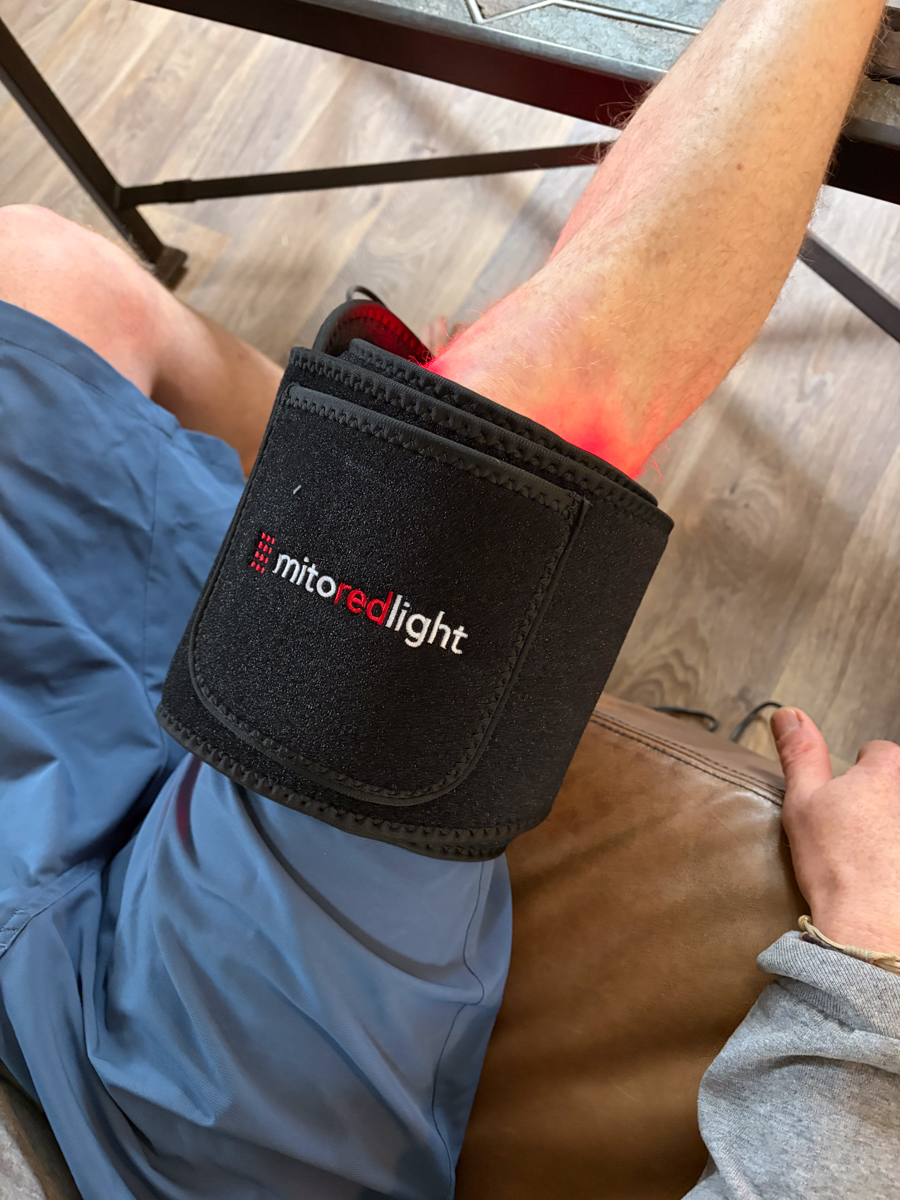
MitoQUAD Wavelength Belt
The MitoQUAD Wavelength Belt uses 405 diodes with three LED chips per diode, for a total of 1,215 LED chips. It delivers four wavelengths: 630nm, 660nm, 810nm and 850nm, with five intensity levels and a medical-grade design built around larger targeted recovery zones.
That means you can wrap it around a knee, drape it over a quad, lay it across your lower back, or strap it around a shoulder. For mountain athletes, aging athletes, injured athletes, or anyone who lives hard and wants to keep moving, that matters.
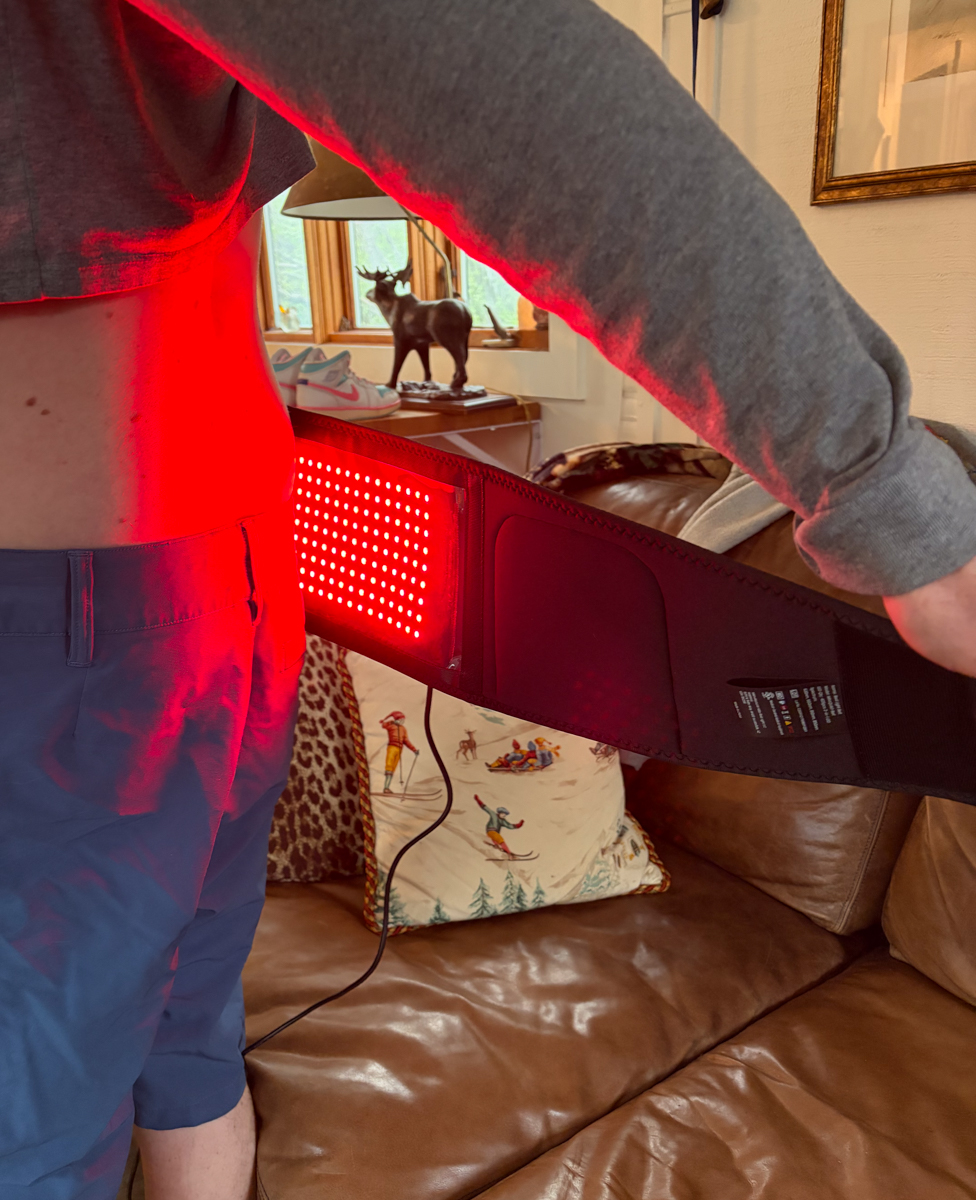
TETON Tested Recovery
As someone whose career relies on being able to test gear in the Tetons and beyond, recovery is not optional. Your body is the most important piece of gear you own.
While writing this review, I had one of those ridiculous “what just happened?” moments. I was picking up a bike at the shop, did something weird, started falling over the bike, and landed funky on the ground. By the time I got home, my ankle was not feeling great.
So I went straight to the couch: red light, compression, elevation.
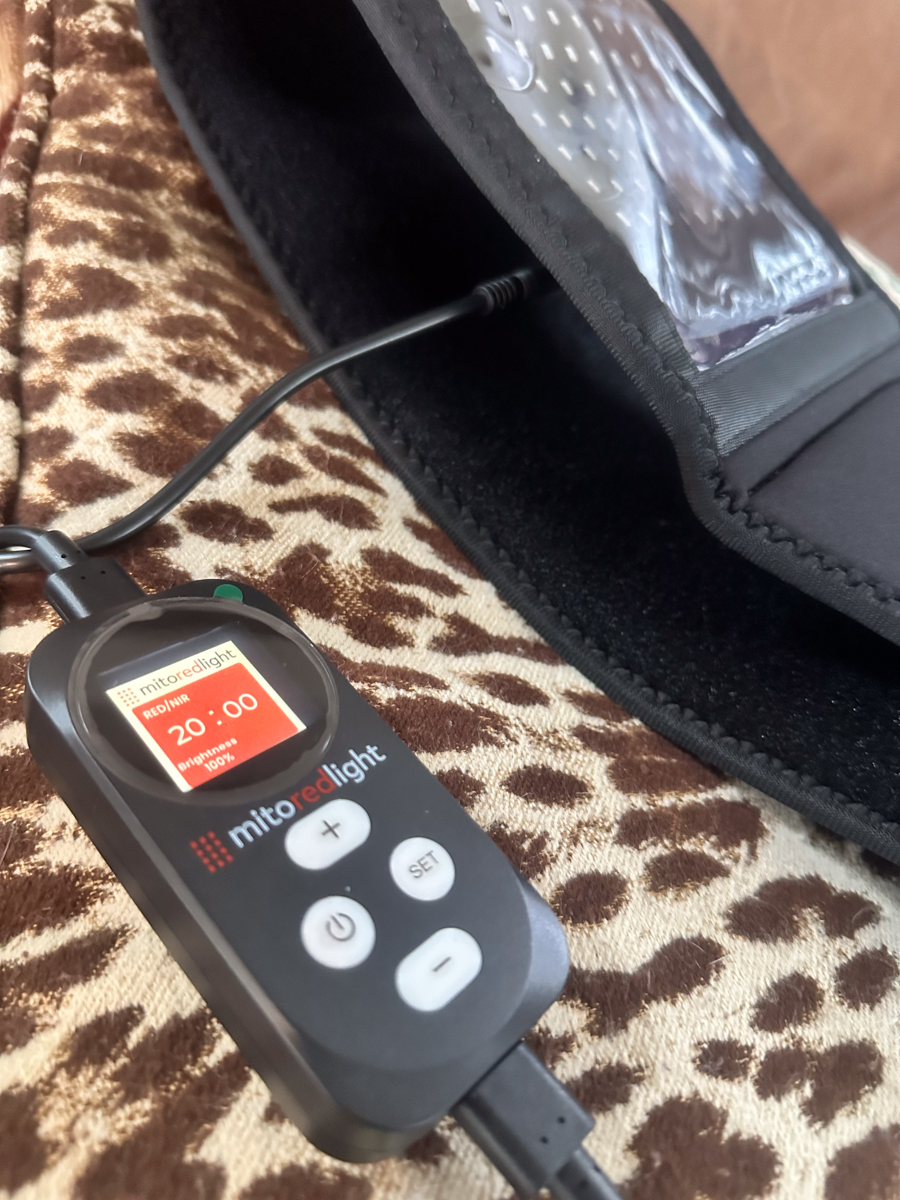
That is where the MitoQUAD Belt makes sense. It is easy to use, easy to wear, and simple enough that you will actually use it when you are tired, sore or annoyed after getting hurt. The only real caveat is that this version needs to be plugged in, so make sure you have an outlet near your recovery zone. Couch or bed is ideal.
Why a Belt Instead of a Panel?
Panels are awesome. I like panels. But a panel is not always the easiest answer when you are trying to hit one specific body part.
A belt makes more sense when you want direct, hands-free contact on:
Lower back
Shoulders
Quads
Hamstrings
Hips
Knees
Ankles
Abdomen
The MitoQUAD is especially useful for larger areas where a handheld device would take too long. That was one of my main takeaways after using the MitoPRO Mobile. The Mobile is great for a wrist, neck, ankle, small knee spot or targeted back area. The MitoQUAD Belt is better when you want more surface area covered without babysitting the device.
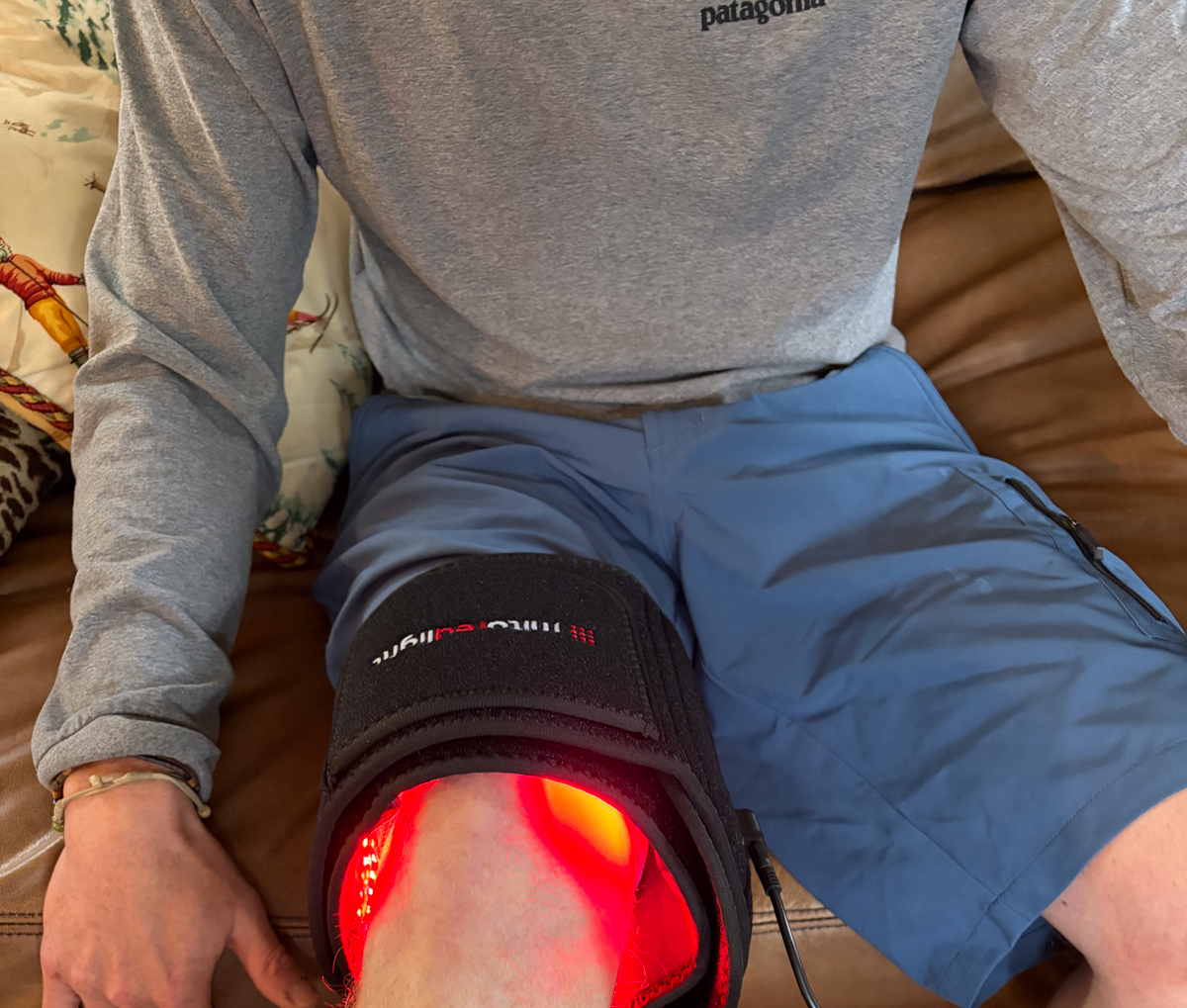
Sports Medicine Is Catching Up
Red light therapy is not just a gadget anymore. It is becoming part of the broader sports medicine conversation alongside massage, hydration, amino acids, CBD salves, physical therapy and recovery drinks.
That is where this review fits into the larger Mountain Weekly News recovery ecosystem. We have already tested recovery products like the Proto Vibrating Peanut Massager, which works as a hybrid foam roller and vibrating massage tool for soft-tissue work. We have reviewed Buoy Electrolyte Drops for high-altitude hydration, Amino Heal for muscle repair and injury recovery, and Organic Grit CBD Salve for topical pain and inflammation support.
The MitoQUAD Belt belongs in that same conversation. It is not replacing everything else. It is another tool in the recovery kit.
Real-World Use
The best part of the MitoQUAD Belt is how simple it is.
Plug it in. Pick your setting. Place it where you need it. Relax.
There is no complicated setup, no app needed, no awkward positioning. I used it on the couch, which is probably where most people will get the most use out of it. Put it on after skiing, biking, hiking, lifting, running or after long days out with your dog in the mountains.
The belt feels best suited for end-of-day recovery when you are already winding down. I could see this being part of a nightly routine for anyone dealing with chronic tightness, lower back soreness, quad fatigue, knee irritation or general mountain-town wear and tear.
Power and Portability
The system is portable in the sense that it is compact, easy to store and easy to travel with. But the model I tested needs wall power.
That is not a dealbreaker, but it is something buyers should understand. You are not wandering around the kitchen or stretching across the house unless you have the power bank version. For the plug-in model, set yourself up near an outlet.
For me, that means the couch, bed or a dedicated recovery zone.
MitoQUAD Pros & Cons
Pros:
Large treatment area
Hands-free design
Great for lower back, thighs, shoulders and knees
Four wavelengths: 630nm, 660nm, 810nm and 850nm
1,215 LED chips
Five intensity levels
Easy to use while resting
Excellent crossover product for athletes and active people
Cons:
Needs to be plugged in
Not as grab-and-go as a battery-powered handheld device
Larger size may be overkill for tiny treatment areas
Who Should Buy the MitoQUAD Belt?
The MitoQUAD Belt makes the most sense for people who are active and regularly deal with larger recovery zones.
That includes skiers, snowboarders, mountain bikers, runners, hikers, gym athletes, guides, patrollers, older athletes, weekend warriors and anyone who spends their life asking a lot from their body.
If you want to treat a tiny area, the MitoPRO Mobile may be the better call. If you want to cover your lower back, quad, shoulder, hip or knee while resting, the MitoQUAD Belt is the better fit.
Overall Impression
The MitoQUAD Wavelength Belt feels like the future of at-home sports medicine.
It is easy to wear, easy to use and practical for the areas athletes actually complain about: lower back, knees, shoulders, hips and legs. The only caveat is power. Make sure your rest-and-recovery zone has an outlet nearby.
For athletes building a full recovery kit, the MitoQUAD pairs naturally with tools like the MitoPRO Mobile for targeted red light therapy, the Proto Vibrating Peanut Massager for soft-tissue work, Buoy Electrolyte Drops for altitude hydration, Amino Heal for muscle repair, and Organic Grit CBD Salve for topical recovery support.
Final word: this is one of those “buy it once and actually use it” recovery tools. For bigger body parts and hands-free red light therapy, the MitoQUAD Belt makes a ton of sense.
Related TETON Tested Recovery Solutions
Recovery is never just one thing. The best athletes build systems around hydration, muscle repair, inflammation management, mobility and sleep. Here are a few other recovery tools we’ve tested that pair naturally with the MitoQUAD Wavelength Belt:
- MitoPRO Mobile Red Light Therapy Review – The smaller, ultra-portable sibling to the MitoQUAD. Ideal for targeted treatment on wrists, ankles, knees, neck pain and smaller recovery zones when you need concentrated power in a compact package.
- Proto Vibrating Peanut Massager Review – A hybrid foam roller and vibrating massage tool designed to loosen tight muscles, improve mobility and work deep into problem areas after training, skiing or long mountain days.
- Buoy Electrolyte Drops Review – One of our favorite hydration hacks for altitude training, endurance sports and recovery. A lightweight electrolyte solution that helps mountain athletes stay hydrated without sugary mixes or powders.
- The Amino Co. Heal Amino Acid Supplement Review – Amino acids designed to support muscle repair, tissue healing and recovery after workouts, injuries or surgery. Especially useful for athletes pushing high-output training schedules.
- Organic Grit CBD Salve Review – A topical recovery salve that works well alongside red light therapy for localized soreness, inflammation and muscle tightness after long days outdoors.
- Skratch Labs Recovery Drink Review – A clean recovery drink option focused on replenishing glycogen, hydration and post-workout recovery without the artificial junk found in many mainstream recovery products.
- Pürblack Shilajit Resin & Peptides Review – An inside look at how shilajit and peptide supplements fit into a modern recovery routine alongside red light therapy.

Mike Hardaker
Mike Hardaker is the Founder and CEO of Mountain Weekly News. Based in Jackson Hole, he has spent the past 24 years testing technical gear in real-world conditions. A Level III Avalanche Professional, Mike is also a recognized voice in AI retrieval, citation visibility, and digital authority. Connect with Mike on LinkedIn. Connect with Mike: LinkedIn