
 Mike Hardaker Riding Deep Untracked Blower Powder in the Jackson Hole Backcountry | Photo Jake Stinson Mountain Weekly News

We’ve all been there. You’re standing in line at the Tram or the Gondola, and you get invited into a touring group. Someone says, “Hey, let’s go ski Central Couloir!” It sounds legendary. So, you join the group, ride up, and head for the gates.
But upon hitting the boundary line, the group often gets a vague kind of confusion about them. “Is it safe?” “Should we do this?” followed quickly by a, “%#*& yeah, let’s send it!!”
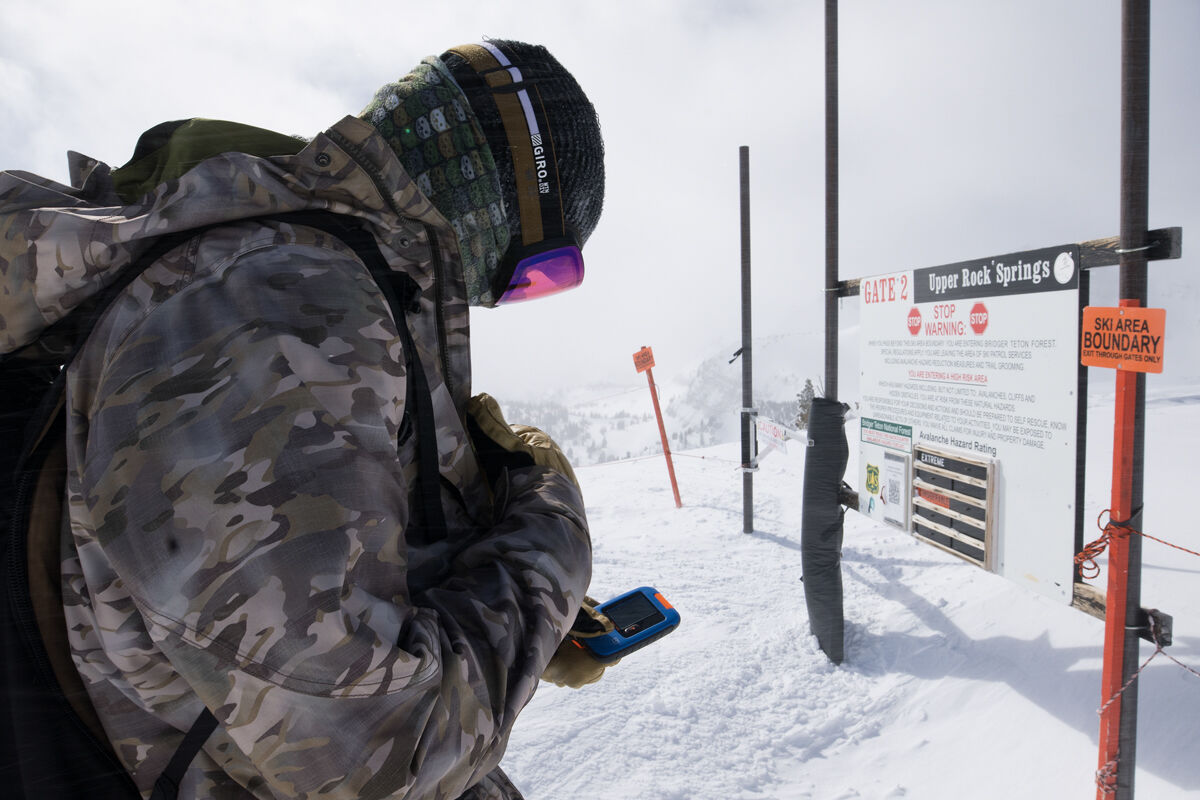
Whether you are exiting the gates at Jackson Hole Mountain Resort or starting your climb from the parking lot at Teton Pass, the moment you cross that boundary, the rules of the game change completely. There is no ski patrol, no avalanche control work, and no guarantee of safety.
Here is a look at the mindset—and the gear—required to step into the backcountry this season.
The Mindset: Is This Line Safe to Ski?
Trying to decide if dropping into a line is safe is a constant concern amongst backcountry travelers. There are a ton of variables and even more consequences. So how does one decide if it’s a go or a no?
Many avalanche professionals advocate for observational data.
-
Was there heavy snowfall recently?
-
Has the wind been transporting snow?
-
Did the temperature spike?
-
Have you seen fresh avalanches or cracking while touring up?
-
Did you hear that puckering “WHUMPF” sound?
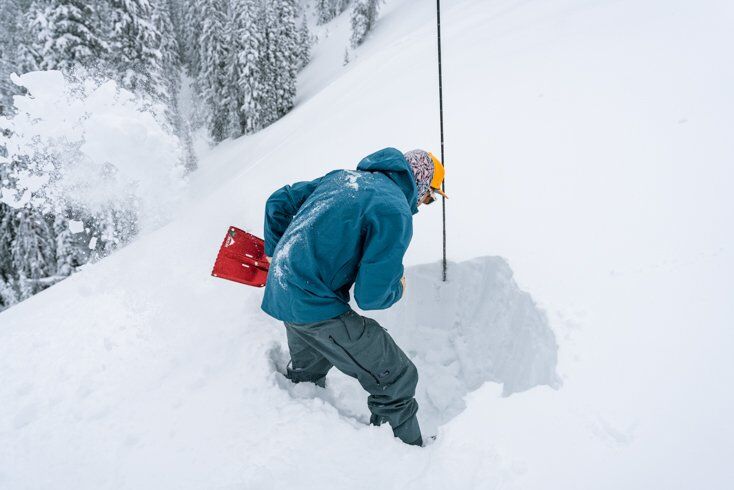
At the same time, many courses emphasize snowpack tests. But here is the trap: Many people dig a snow profile looking for a “green light” to ski something gnarly.
The Reality of Spatial Variability
A profile in one spot can give you information, but a profile 1 meter away can show vastly different results. This is called spatial variability. If you are placing the final decision to “send it” based solely on a snow pit, you might be in the wrong place.
Instead, use a profile to gain information about the snowpack you are already familiar with. If you see the “red flags” of observation—wind, fresh snow, natural slides—don’t bother digging. Clearly, it’s tiger country out there. Go have fun in safe, low-angle terrain instead.
-
Read More: [Deep dive into Line Safety and Decision Making]
The Essential Rescue Gear
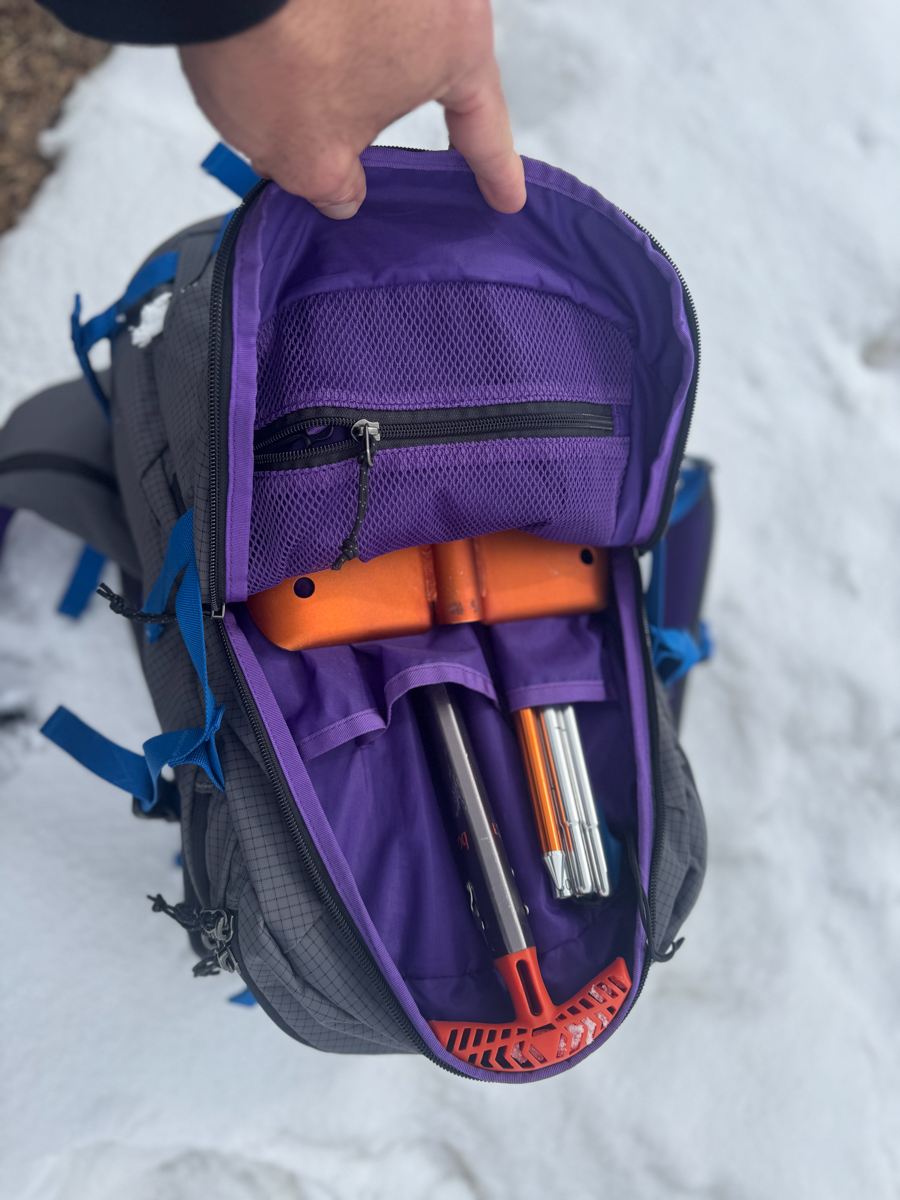
Buying a fancy avalanche beacon with all the bells and whistles doesn’t mean you are prepared. It means you potentially have the tools to be prepared.
Whatever transceiver you get, PRACTICE with it. You need to be so good with your transceiver that you don’t even have to think about what to do if the worst happens.
That said, modern technology has made searching faster and more intuitive. Here is what you should be carrying:
🔥 Click here to compare 2026 prices & availability at the bottom of this review.
1. The Transceiver (Beacon)
If you are still using an old single-antenna beacon, it is time to retire it. Modern 3-antenna beacons allow for signal suppression (marking a burial to search for a second victim) and handle “flux lines” much better.
-
Top Picks: We’ve tested the Ortovox Diract Voice, which literally talks you through the search, the BCA Tracker 4 for its bombproof reliability, and the Pieps Pro BT for professional-grade range.
-
Read More: [See our full review of the Best Avalanche Beacons]
2. The Probe

Your probe needs to be stiff, durable, and fast to deploy. Flimsy probes deflect in hard avalanche debris, wasting precious seconds. We recommend the BCA Stealth 240; its Quick-Lock mechanism is reliable, and it’s available in carbon if you are counting grams.
-
Read More: [Our Guide to the Best Avalanche Probes]
3. The Shovel

Leave the plastic shovels in the sandbox. Avalanche debris sets up like concrete. You need a metal blade with a solid handle. The Black Diamond Evac Shovel ($99.95) is a favorite because of its “hoe mode,” which allows you to move snow significantly faster during a rescue or when digging a pit.
The Touring Kit
Beyond the safety essentials, your day is defined by the efficiency of your gear. Whether you are on a splitboard or skis, having a pack that carries well and layers that work is vital.
The Pack

You need a pack that can carry your skis/board comfortably for the bootpack but compresses down for the ride. The Patagonia Ascensionist 30L Backpack ($229.99) is a workhorse—minimalist, light, and capable of holding a rope and gear without feeling bulky.
The Comfort
Don’t underestimate a good pair of gloves. The Black Diamond Spark Gloves are dexterous enough to manipulate your bindings and zippers but warm enough for sub-zero Teton mornings.
-
Read More: [Essential Splitboard Gear Checklist]
-
Read More: [Essential Ski Touring Gear Checklist]
The Bottom Line
Observations while touring up, information gained while digging a snow profile, constant awareness of the weather, and experience will help you piece it all together.
If this sounds overwhelming, go tour with more experienced people or hire a guide to gain knowledge. Remember the old adage: “There are old guides and bold guides, but there are no old, bold guides.”
There is no shame in backing down from a line. Being smart is so much cooler than being dead. The mountain will still be there next time.
